 Skip to content

Echinacea Pills: Capsules, Research & Buyer Checks
Echinacea pills are one of the most searched herbal supplement formats for people comparing seasonal products, purple coneflower supplements and capsule-based botanical extracts. Across the UK, many shoppers want a straight answer: what is echinacea, why do people use it, how do pills compare with tea or tinctures, and what should you check before buying?
This guide keeps the focus on real search intent: echinacea plant types, capsule format, active compounds, research context, dosage considerations, side effects, label quality and how Crown Supplements approaches clean supplement formulas without filler-heavy padding.
What Exactly is Echinacea?
Echinacea is not just one plant. It is a group of flowering plants native to North America. Many people know it as the purple coneflower, the type of plant often seen in gardens with bright purple petals and a raised central cone.
Before echinacea pills became a popular supplement format, different echinacea species were used traditionally by Native American communities. Today, modern buyers usually meet echinacea in a much more convenient format: capsules, tablets, teas, tinctures or liquid extracts.
There are nine known echinacea species, but three are most common in supplements: Echinacea purpurea, Echinacea angustifolia and Echinacea pallida. Different echinacea pills may use different species or combinations, which is why the back label matters.
Supplements can also use different parts of the echinacea plant. Some focus on the root, others on the flowers, leaves, stems or the full aerial part. This affects the natural compound profile of the finished supplement, including alkamides, polysaccharides, glycoproteins and caffeic acid derivatives such as cichoric acid.
UK buyer point: when comparing echinacea pills in Britain, do not only look at the front label. Check species, extract ratio, plant part, capsule count, serving guide and whether the formula contains unnecessary fillers or binders.
How Echinacea Might Work: The Science Bit Made Simple
The main reason people research echinacea supplements is their long-running connection with seasonal wellness routines and immune system studies. Research does not point to one single magic compound. Instead, the interest comes from the way different echinacea compounds may interact with normal immune cell activity and inflammatory signalling in laboratory and clinical research.
Echinacea contains active plant compounds including alkamides, polysaccharides, glycoproteins and caffeic acid derivatives. Scientific reviews discuss how these compounds may interact with innate and adaptive immune pathways, although real-world results depend heavily on the species, plant part, extract type and dose used in the study. For deeper reading, this PubMed Central review of Echinacea purpurea pharmacology and phytochemistry gives useful background.
The better way to explain echinacea is this: it is a botanical ingredient with a complex plant profile, not a simple one-ingredient answer. This is why quality, extract ratio and label clarity matter so much when choosing echinacea pills.
Why Choose Echinacea Pills? Convenience and Consistency
Echinacea comes in many forms, including liquid tinctures, teas, capsules and tablets. Pills and capsules are popular because they are simple, pre-measured and easy to build into a routine without brewing tea or measuring drops.
A capsule format also avoids the strong, sometimes tingly taste that echinacea can have in liquid extracts. For UK customers comparing supplements online, this is one reason capsule products often get more attention than loose herbal formats.
Pills and capsules may also offer more consistency because the dose is measured per capsule. Where a product uses a clearly stated extract, such as Echinacea Extract 10:1, the buyer can compare it more easily against other echinacea supplements.
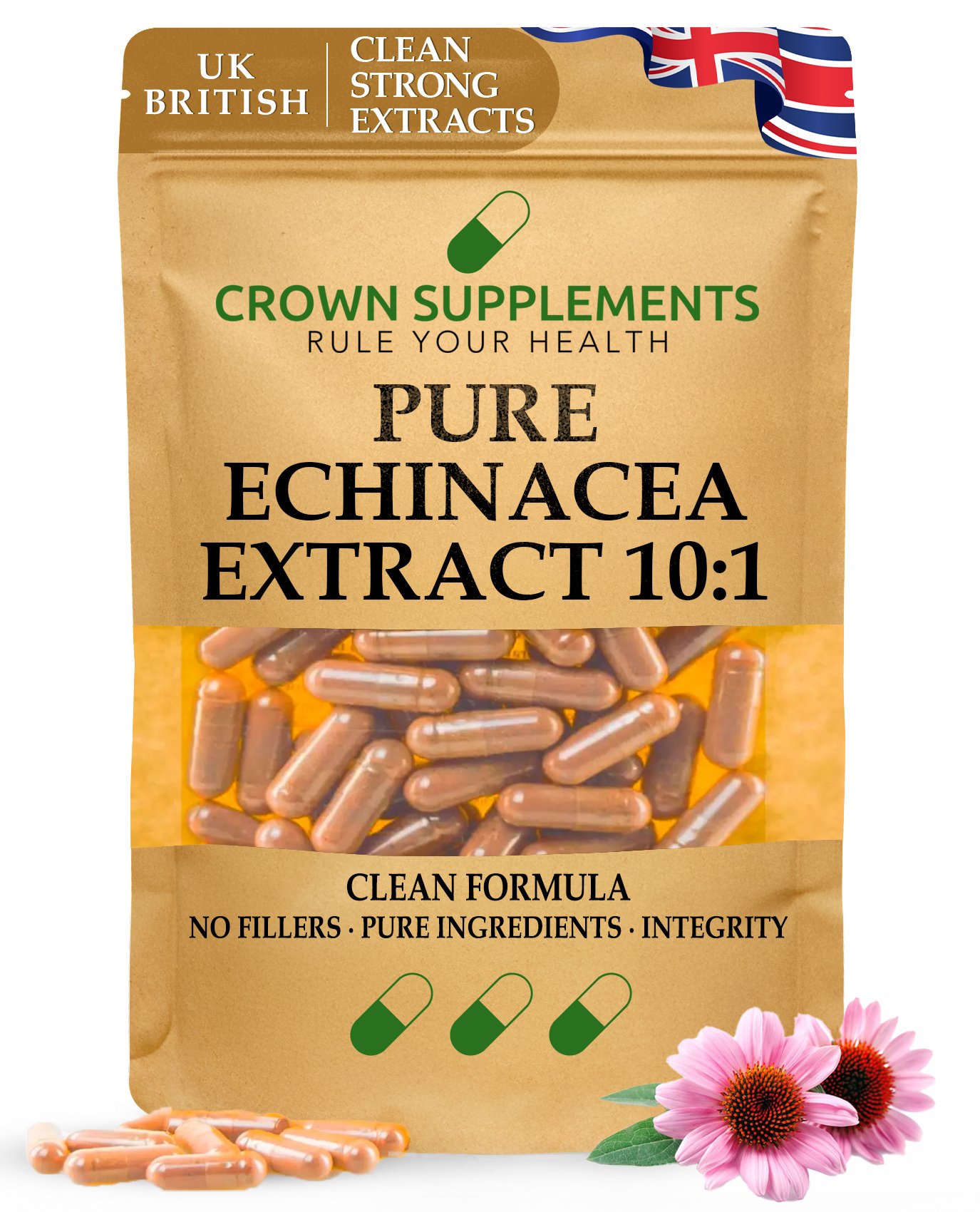
Product format matters
Crown Supplements Pure Echinacea Extract 10:1 Capsules are positioned around a clean capsule format: echinacea extract in capsules, with the focus on formula clarity, no fillers, no binders and no unnecessary extras.
View the Crown Supplements Echinacea capsule product page for capsule options, product images and live product information.
Why People Research Echinacea Pills
People usually search for echinacea pills because they want to understand whether the ingredient belongs in a seasonal supplement routine. The most common questions include whether echinacea has research behind it, whether pills are better than tea, how long it should be taken, and what safety points matter.
High-authority sources give a measured picture. The NCCIH overview on echinacea notes that echinacea has been studied mainly for the common cold, but findings vary. WebMD’s echinacea supplement guide also covers common uses, side effects and interaction cautions.
For Crown Supplements, the useful customer-facing answer is not hype. It is clear product information, measured wording, strong label checks and a clean supplement format that lets the customer understand exactly what they are buying.
Common Cold and Seasonal Research
This is where echinacea gained much of its public attention. Many people look at echinacea pills when they are comparing seasonal supplement products, especially around colder months when searches for echinacea capsules, echinacea tablets and common cold research increase.
The research picture is best described as mixed but relevant. Some studies have reported favourable findings for certain echinacea preparations, especially those using Echinacea purpurea, while others show smaller or inconsistent effects. This does not make echinacea useless. It means the exact product type, plant part, extraction method and timing can change the research outcome.
That point is important for buyer intent. A low-detail echinacea product with unclear plant species is harder to judge. A cleaner, clearer capsule product with visible extract information gives the customer more to compare.

Immune System Research Context
Beyond short-term seasonal use, echinacea is also researched in relation to immune cell signalling and immune system modulation. Strong promise language is often used online, but that can be misleading. A better phrase is immune system research, because the evidence is about how certain extracts interact with normal immune pathways in specific research settings.
Laboratory and animal studies have explored how echinacea extracts may influence macrophages, natural killer cells and inflammatory messengers. Human research is more complex, and the results are not identical across all product types.
That is why the UK supplement buyer should focus on practical details: which echinacea species is used, whether the product is an extract, what the extract ratio is, whether the serving guidance is clear, and whether the ingredient list is clean.
Skin and Other Research Areas
Skin Research
Historically, echinacea was used topically in traditional practices. Oral echinacea pills are different from topical creams, so the two should not be viewed as the same format. Modern research into echinacea and skin mostly focuses on extracts, inflammation markers and topical applications, not guaranteed results from capsules.
For readers searching skin-related echinacea questions, the sensible answer is measured: it is an area of research, but anyone with persistent skin concerns should speak with a qualified healthcare professional rather than relying on a supplement alone.
Other Areas People Ask About
Some people search echinacea alongside anxiety, pain, urinary tract infections, ear infections and general inflammation. These are usually based on traditional use or early-stage research. They should not be viewed as settled claims or a reason to replace medical care.
From a supplement buying point of view, these broader questions show why careful wording matters. Crown Supplements pages should help customers understand the ingredient without turning early research into promises.
Understanding Dosage and How to Take Them
There is no single universal dose for echinacea pills because products vary by species, plant part, extract ratio and capsule strength. This is why customers should always follow the label on the specific product they choose.
Some people use echinacea seasonally, while others use it for short periods when it fits their routine. Long-term continuous use is less studied, so it is sensible to speak with a healthcare professional if you plan to use echinacea for an extended period.
For any capsule product, look for a clear serving guide, a clear capsule amount, and ingredient details that explain what is actually inside the capsule. A product that hides behind vague wording is harder to compare.
Are There Any Side Effects or Risks?
Natural does not automatically mean suitable for everyone. Echinacea is generally discussed as a short-term supplement for many healthy adults, but some people may experience side effects or allergic reactions.
Commonly discussed side effects include digestive upset, nausea, stomach discomfort, headache, dizziness, skin rash or itching. People with allergies to plants in the daisy family, including ragweed, chrysanthemums, marigolds and daisies, should be especially cautious.
People with autoimmune conditions, people taking immunosuppressant medication, pregnant or breastfeeding women, and anyone on regular medication should speak with a healthcare professional before using echinacea. The Cleveland Clinic echinacea guide gives a useful overview of interaction cautions, while the MSD Manual professional page outlines safety considerations for clinicians.
- Allergy caution: avoid or seek advice if you react to ragweed, daisies, chrysanthemums, marigolds or similar plants.
- Medication caution: speak with a doctor or pharmacist if you use prescription medication, especially immune-related medicines or blood-thinning medicines.
- Condition caution: seek advice if you have autoimmune disease, advanced immune conditions, liver disease or complex medical needs.
- Children and pregnancy: use only with professional guidance because safety considerations are different.
Choosing Quality Echinacea Pills
Not all echinacea pills are made to the same standard. Product quality, extract type, capsule ingredients and manufacturing approach can vary widely. A polished front label does not always mean a clean formula.
For UK shoppers comparing echinacea pills online, these checks matter most:
- Species: look for Echinacea purpurea, Echinacea angustifolia, Echinacea pallida or a clearly stated blend.
- Plant part: check whether the product uses root, aerial parts, flowers, leaves or a full plant extract.
- Extract detail: an extract ratio such as 10:1 gives buyers more information than vague “herbal blend” wording.
- Capsule contents: check for unnecessary fillers, binders, colours, sweeteners or flow agents.
- Serving clarity: the label should make capsule amount, serving size and directions easy to understand.
- Brand standards: choose brands that explain their formula philosophy clearly instead of hiding behind generic wellness language.

Echinacea Pills vs Other Forms
Pills and capsules are popular, but they are not the only option. Echinacea is also found as tinctures, teas, powders, gummies and topical products. Each format has a different use case.
| Form | Why people choose it | Points to check |
|---|---|---|
| Pills / Capsules | Convenient, measured serving, avoids strong taste, easy for daily routines. | Check species, extract ratio, capsule shell and whether fillers or binders are present. |
| Tinctures | Liquid format, adjustable drops, often used in traditional herbal routines. | May have a strong taste and often uses alcohol as a base. |
| Tea | Simple, familiar, comforting as a hot drink. | Compound levels can be variable and may be lower than concentrated extracts. |
| Gummies / Chewables | Easy taste and convenient for people who dislike swallowing capsules. | Often contain sugar, sweeteners, flavours or lower active amounts. |
| Topical creams | Used directly on the skin in some product types. | Not the same as taking echinacea capsules orally. |
For Crown Supplements, capsules are the most relevant format because they match the clean formula approach: measured servings, straightforward labels and a focus on the named ingredient rather than sugary formats or complicated blends.
Real-World Experiences and Considerations
Search online and you will find plenty of people who say echinacea pills fit well into their seasonal routine. Personal experience can be useful, but it should not replace controlled research or professional advice.
The placebo effect can also influence how people feel after taking any supplement. That does not make the experience meaningless, but it does mean readers should look at the wider picture: product quality, lifestyle, diet, sleep, stress, existing health issues and medication use.
Echinacea pills should be seen as one possible supplement option within a broader routine, not as a shield against illness. For a British supplement brand, the stronger trust signal is not exaggerated promise. It is measured copy, clean formulation, clear labelling and a product page that lets customers compare properly.

Echinacea pills should be judged by the back label.
At Crown Supplements, the aim is to make supplement choice easier for UK customers who are tired of filler-heavy formulas and vague front-label claims. For echinacea capsules, the important details are simple: named ingredient, extract strength, capsule format, serving clarity, no fillers, no binders and no unnecessary formula padding.
Conclusion
Echinacea pills remain one of the most searched herbal supplement formats for people comparing seasonal capsules, purple coneflower products and clean-label botanical extracts. The strongest way to understand them is not through hype, but through species, plant part, extract ratio, capsule format, safety considerations and product quality.
The research around echinacea is nuanced. Some areas are well discussed, some findings vary by product type, and safety checks still matter. This is why readers should compare labels carefully and speak with a healthcare professional if they are pregnant, breastfeeding, taking medication, managing allergies or dealing with an existing condition.
For Crown Supplements, the direction is clear: clean supplement formulas, named ingredients, clear capsule formats, no fillers, no binders and useful product pages that help UK customers make a more informed choice.

